



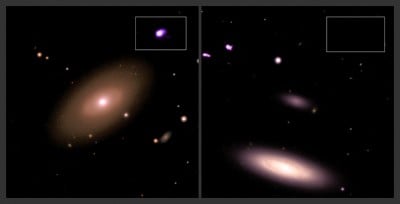
TLDR: NASA's Chandra X-ray Observatory has revealed that smaller galaxies may not host black holes as previously thought, challenging established theories on galaxy formation. This finding suggests a more complex relationship between black holes and galaxies, prompting further research into cosmic structures and their evolution.
Recent findings from NASA's Chandra X-ray Observatory have unveiled intriguing insights into the relationship between black holes and small galaxies. Traditionally, it has been believed that larger galaxies harbor massive black holes at their centers, a trend observed across the universe. However, Chandra's latest observations suggest that smaller galaxies may not conform to this established pattern, indicating a more complex cosmic relationship.
The study highlights that while many larger galaxies host supermassive black holes, some smaller galaxies, particularly those that are less luminous, may lack these massive entities entirely. This revelation challenges existing theories about galaxy formation and evolution and suggests that the growth of black holes might not be as ubiquitous as once thought. The findings raise important questions about the conditions necessary for black hole formation in these smaller systems.
Researchers utilized Chandra's advanced imaging capabilities to analyze the X-ray emissions from a sample of small galaxies. The data revealed a surprising scarcity of black holes, suggesting that these galaxies might evolve differently compared to their larger counterparts. Understanding these differences is crucial for piecing together the history of our universe and how galaxies have formed over billions of years.
This research not only enhances our understanding of galaxy formation but also adds to the ongoing dialogue about the nature of black holes. The implications of these findings are significant, as they may alter how scientists approach the study of cosmic structures and their development. As observations continue, astronomers hope to uncover more about the elusive nature of black holes and their roles in smaller galaxies.
In conclusion, NASA's Chandra X-ray Observatory has played a pivotal role in reshaping our understanding of the universe. The discovery that small galaxies may not follow the expected trend of hosting black holes opens up new avenues for research in astrophysics and challenges our preconceived notions about the cosmic landscape. As we delve deeper into these findings, the mysteries of the universe continue to unfold, inviting further exploration and inquiry.
Please consider supporting this site, it would mean a lot to us!
