



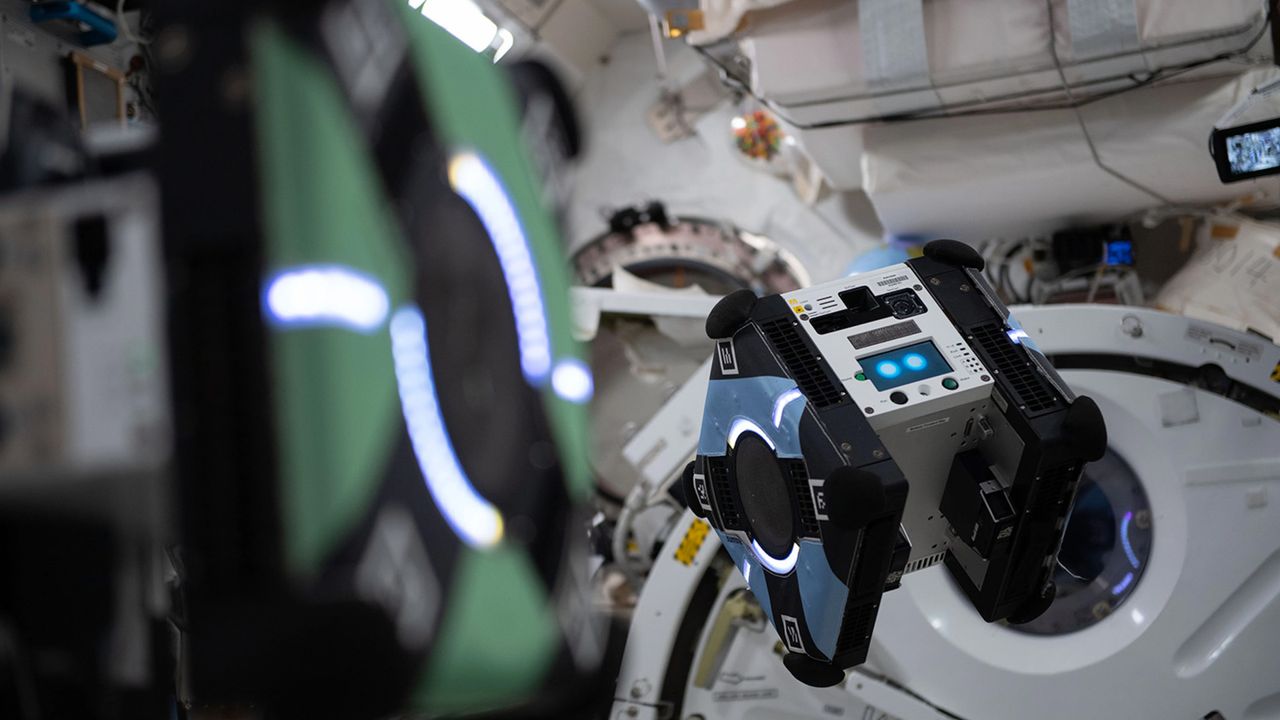
TLDR: A robotic system equipped with AI has successfully navigated the International Space Station, marking a significant advancement in autonomous technology for space missions. This achievement enhances operational efficiency and opens new possibilities for future explorations, potentially transforming how astronauts work and paving the way for missions to the Moon and Mars.
In a groundbreaking achievement for space exploration, a robotic system has successfully navigated around the International Space Station (ISS) with the help of artificial intelligence (AI). This innovative pilot program marks a significant step forward in the use of autonomous technology in space missions, allowing robots to assist astronauts in performing various tasks more efficiently.
The AI-powered robot was able to fly freely around the ISS, demonstrating its ability to make real-time decisions and adapt to its surroundings. This capability not only enhances the operational efficiency of the space station but also opens up new possibilities for future missions where human presence may be limited or unavailable. By utilizing advanced algorithms and machine learning techniques, the robot can analyze its environment, avoid obstacles, and perform specific tasks without direct human intervention.
This mission highlights the growing importance of automation in space exploration. As missions become more complex and the demand for research in microgravity increases, the need for reliable robotic assistance becomes paramount. The successful demonstration of this AI-driven pilot program could lead to further integration of autonomous systems in space operations, potentially transforming how astronauts work aboard the ISS and beyond.
Moreover, the application of AI in robotics is not just limited to the ISS. The advancements in this technology could pave the way for future exploration missions to the Moon, Mars, and other celestial bodies. Robots equipped with AI could conduct surveys, gather data, and even prepare habitats for human arrival, significantly reducing the risks associated with human spaceflight.
As we continue to explore the final frontier, the collaboration between humans and machines will be essential. This successful pilot program serves as a testament to the potential of AI in enhancing human capabilities in space, making exploration safer and more efficient. The future of space exploration looks promising with the integration of such cutting-edge technologies, and we can expect to see more innovative solutions emerge as we venture further into the cosmos.
Please consider supporting this site, it would mean a lot to us!
